Most AI strategies do not fail in the demo. They fail after the demo works. That is the uncomfortable lesson many teams discover only after a promising pilot starts touching real users, real data, and real operational ownership.
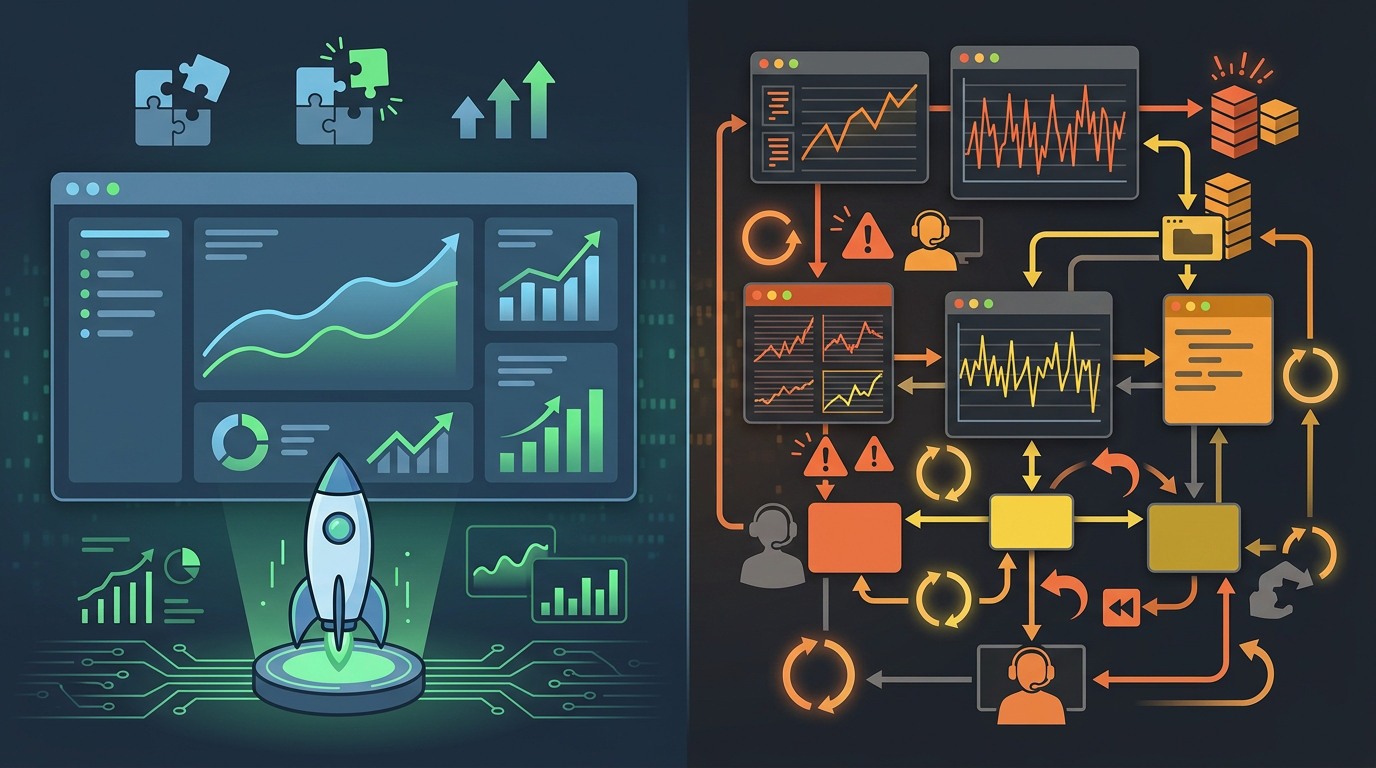
A pilot proves that a model can perform in a constrained environment. It does not prove that the company can operate that behavior safely, repeatedly, and economically in production. That distinction is where a lot of AI roadmaps collapse.
A Pilot Is a Capability Test, Not an Operating Model
In a pilot, the edge cases are limited, the users are often friendly, the data is curated, and failure usually means another iteration. In production, failure means a customer impact, a broken workflow, a compliance question, or a support queue that did not exist before.
This is why I keep coming back to the organizational side of AI adoption. Technical acceleration can become <a href=”https://runwithran.com/2026/06/07/career-leverage-small-software-companies/”>organizational debt when ownership is unclear</a>. The model may be good, but the operating model around it is often immature.
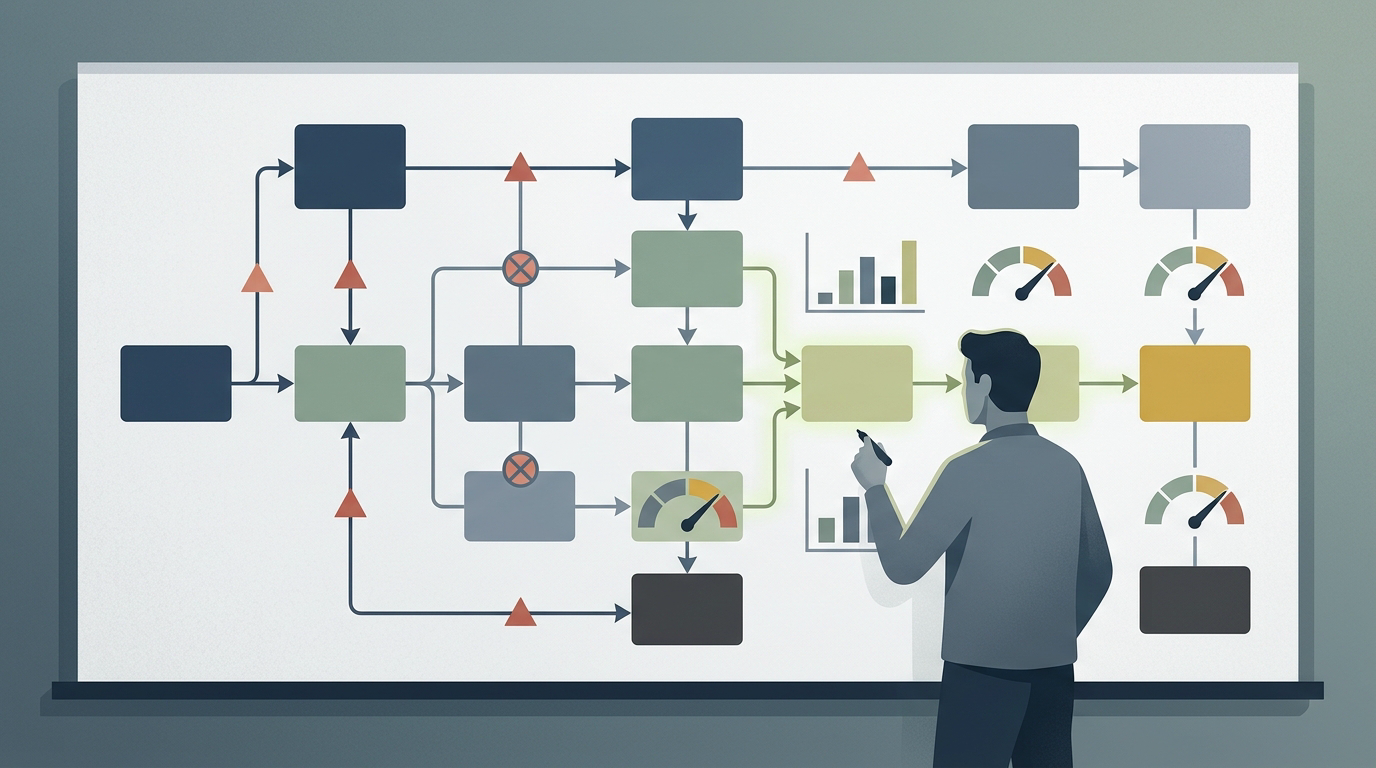
The Production Questions That Slide Decks Avoid
- Data quality: what happens when inputs are messy, stale, or contradictory?
- Exception handling: who receives the case when the agent is unsure or wrong?
- Behavior changes: who approves prompt, tool, policy, or model updates?
- Monitoring: are we measuring operational quality or only model accuracy?
- Rollback: can the business safely return to the previous process when the system misbehaves?
These are not academic questions. They decide whether AI becomes infrastructure or remains a demo with a good story. I see the same pattern in <a href=”https://runwithran.com/2026/06/05/developer-infrastructure-product-control-plane/”>AI-assisted development workflows</a>: speed is useful only when review, accountability, and production readiness catch up.
A Practical Pre-Flight Checklist
- Define automation boundaries. Write down what the system is allowed to decide, suggest, escalate, and never do.
- Design the exception path first. The unhappy path should not be discovered by the first real customer.
- Assign a day-90 owner. Someone must own system behavior after the pilot team moves on.
- Measure operational quality. Track review load, escalations, latency, rollback events, and user trust — not only accuracy.
- Budget maintenance like a product. Agents need monitoring, updates, evaluation, and process changes. They are not magic labor.
The Real AI Strategy Test
The real test is not whether the AI works in a lab. The real test is whether the organization can absorb it into a workflow without hiding risk downstream. If nobody owns behavior on day 90, the pilot may still succeed — but the system will not become durable infrastructure.
Context: this article was inspired by a practitioner discussion about why agentic AI strategies often collapse after the pilot phase, then expanded into a production-readiness framework.
Originally posted on LinkedIn: <a href=”https://www.linkedin.com/feed/update/urn:li:activity:7469982396793270272/”>Hebrew version</a>