“Be more engaged with the team” is not feedback. It is a feeling pretending to be a metric. That distinction matters most during probation, onboarding, or the first months of a new engineering role.
When expectations are vague, the employee thinks they are progressing because they complete tasks, attend meetings, ask questions, and take notes. The manager senses something is missing, but never translates that feeling into observable behavior. The result is anxiety instead of movement.
Probation Needs Signals, Not Vibes
A probation period should answer a simple question: is this engineer becoming more capable inside this team’s real operating environment? That cannot be measured only by whether tickets close. It also cannot be measured by vague impressions about energy, visibility, or “fit.”
Engineering leadership works better when expectations are visible. The same principle applies to <a href=”https://runwithran.com/2026/06/04/security-architecture-breach-containment/”>career leverage and growth criteria</a>: people need evidence they can inspect, not moving goalposts they have to guess.
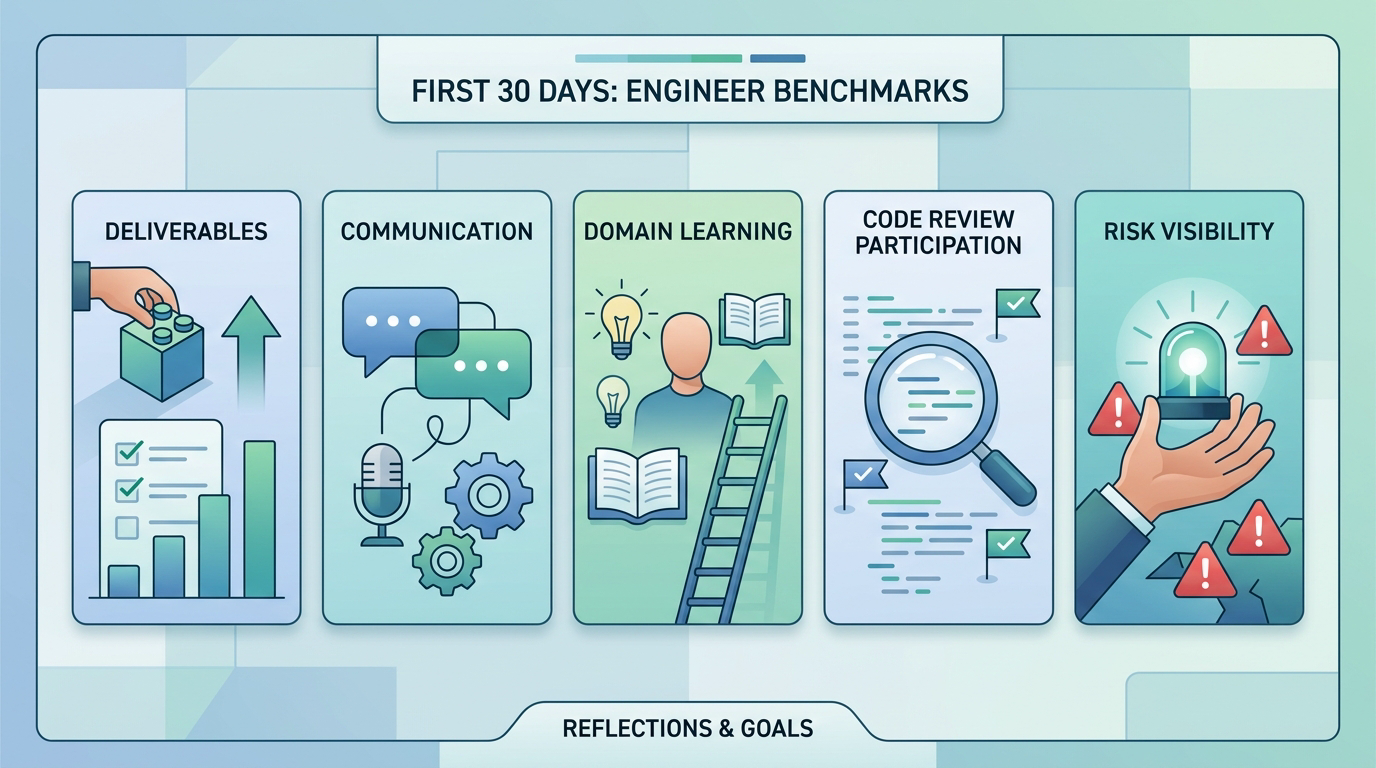
The Five Signals I Would Benchmark
- Deliverables: what was actually completed this week, and at what quality bar?
- Context: which parts of the domain, architecture, or customer problem can the engineer now explain independently?
- Visibility: are blockers raised early enough for the team to react, or only when the deadline is already at risk?
- Collaboration: are there useful interactions around code, design, debugging, and review — not just calendar attendance?
- Load readiness: what more complex task can the engineer safely take next?
What the Manager Owes the Engineer
If a manager wants more initiative, they need to define what initiative looks like on this specific team. Does it mean proposing design options? Asking for review earlier? Owning a small customer issue? Writing clearer status updates? Pairing with another developer?
Without that translation, “show more ownership” becomes a threat instead of guidance. It is similar to poor process metrics in software teams: if the signal is vague, people optimize for survival instead of learning. Good <a href=”https://runwithran.com/2026/06/08/manager-one-on-ones-clear-career-criteria/”>software-development process and leadership judgment</a> makes behavior inspectable.
A Better Conversation for Week One, Two, and Three
- Week one: agree on the first visible deliverables and the expected communication rhythm.
- Week two: review what domain context is still missing and who can help close it.
- Week three: define three observable behaviors that would show stronger initiative next week.
- Every week: write the expectation down, then inspect it together.
The right sentence from the employee is not “I am trying.” The stronger sentence is: “Let’s agree on three observable behaviors that would show progress, and review them next week.” That moves the conversation from personality to evidence.
Context: this article was inspired by a developer discussion about ambiguous probation feedback and critical comments, then expanded into an onboarding benchmark leaders can actually use.
Originally posted on LinkedIn: <a href=”https://www.linkedin.com/feed/update/urn:li:activity:7469982635663179776/”>Hebrew version</a>