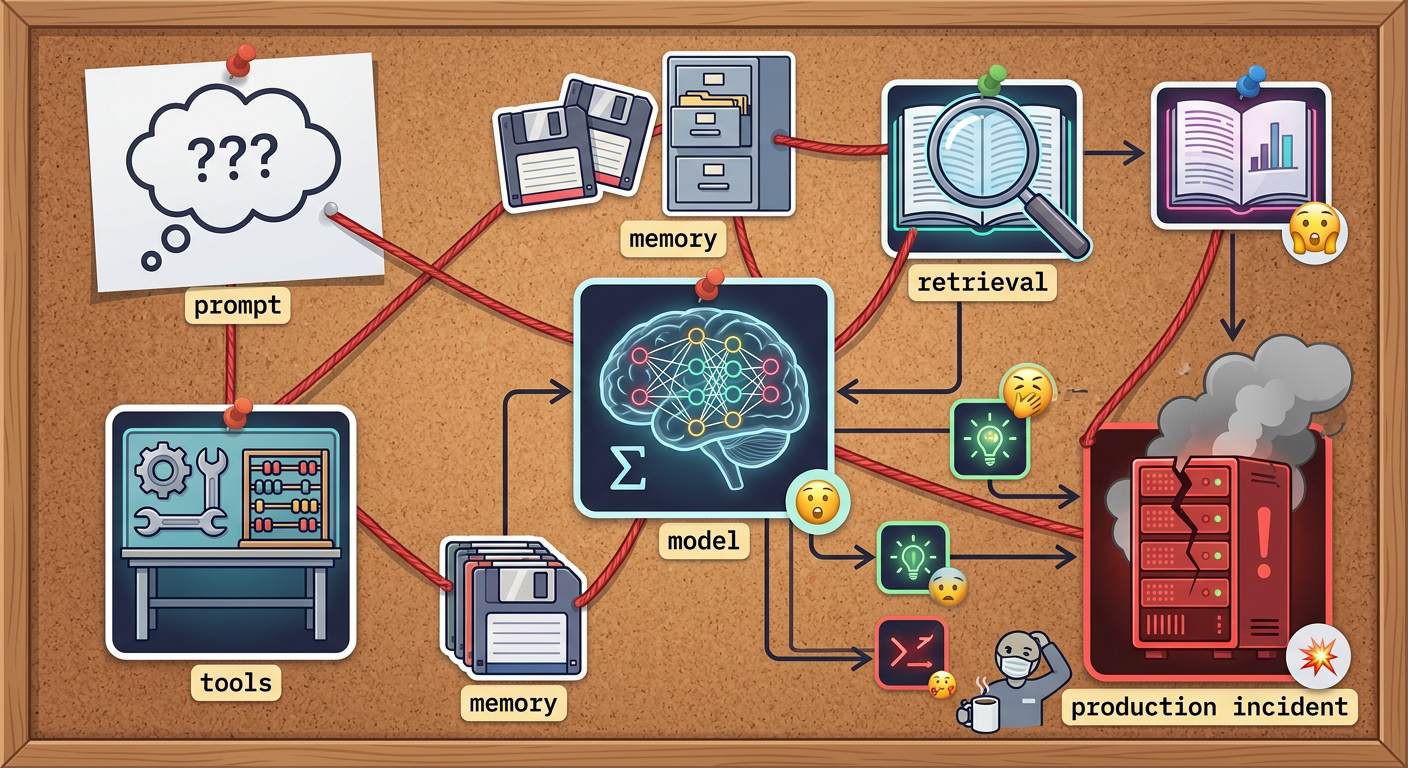
A developer who is not learning at work is not always in a comfortable role. Sometimes they are in a system that is quietly deleting their career benchmark. The dangerous part is that it can still feel productive day to day: tickets move, meetings happen, code gets written, and the calendar stays full.
The problem starts when the work stops producing evidence. In the next interview, promotion discussion, or compensation conversation, “I was busy” does not help much. The useful questions are sharper: what did you lead, what decision did you make, what tradeoff did you evaluate, and what result changed because of your work?
This came up in a practitioner discussion from a backend engineer with roughly three years of experience who felt stuck. Complex decisions were owned elsewhere, designs lived in someone else’s head, review cycles were slow, and the engineer was struggling to build credible stories for the next move. The details are familiar because the pattern is common: the job provides activity, but not enough career evidence.
Years of Experience Are Not the Same as Evidence
Years of experience are an input. Evidence is the output. A strong software engineering career is built from moments where you can show judgment under constraints: choosing between delivery speed and maintainability, reducing operational risk, improving a review process, owning a production issue, or communicating a tradeoff clearly enough that the organization makes a better decision.
This is why two engineers can both have three years of experience and look very different in the market. One has three years of repeated execution inside a narrow lane. The other has accumulated decision artifacts, production exposure, incident lessons, design notes, and examples of influence. The second engineer is easier to trust because the evidence is easier to inspect.
That is also why I like treating career growth as a measurement problem, not only a motivation problem. If feedback is vague, the system is weak. The same principle applies to engineering probation feedback metrics: vague praise and vague concern are both less useful than concrete criteria.
The Quarterly Career Evidence Benchmark
If I were reviewing my own growth every quarter, I would not start with whether I felt busy. I would check five forms of evidence.
1. Ownership events. How often were you accountable for a problem end to end, not only assigned a ticket? Ownership means you understood the context, shaped the path, coordinated dependencies, and stayed with the result after the code merged.
2. Design artifacts. How many decision docs, RFCs, architecture diagrams, tradeoff notes, or short technical proposals did you create? Even if the team does not require them, you need them. They force clearer thinking and later become interview evidence.
3. Review latency. If backend debt, important refactors, or risky changes wait weeks for review, that is not only process friction. It blocks learning. A developer cannot grow from feedback that never arrives. Measure it, document it, and raise it as a system issue.
4. Complexity exposure. How often did you touch production, deployment, observability, scale, security, performance, or failure modes? If those areas are permanently owned by one senior engineer or the manager, you may be outside the real learning loop.
5. Interview evidence. Can you tell three real stories using situation, tradeoff, action, and outcome? If not, do not wait until the week before job hunting. Start creating those stories now through better proposals, better notes, and more deliberate ownership.
What To Do When the Job Does Not Create Evidence
The wrong response is to invent impact later. That becomes personal technical debt. You may survive one interview, but you will still carry the gap into the next role. The better response is to create small, legitimate evidence loops while you are still in the job.
First, propose work with a short written document before asking for permission. “I found this issue, here are the tradeoffs, here is the smallest useful version, and here is the risk if we ignore it.” Even when the proposal is not accepted, the artifact shows how you think.
Second, build a small side system that demonstrates real engineering, not another polished CRUD app. Include authentication, a queue, observability, deployment, failure modes, and a short design note. This is especially useful if your day job blocks exposure to production complexity.
Third, document blockers professionally. Do not write a complaint log. Write an engineering log: “I proposed X, it did not move because of Y, so I did Z.” This helps you separate your own gaps from the organization’s constraints.
This connects directly to career leverage in small software companies. A small company can be excellent for growth if it gives you ownership and complexity. It can also be limiting if all meaningful decisions stay concentrated in one person. The title matters less than the evidence the environment lets you create.
A Practical Checklist for the Next 30 Days
- Write down three work stories you could tell in an interview today. Mark where each story lacks a measurable result.
- Create one short design or tradeoff document for a real issue, even if nobody asked for it.
- Measure review latency for work that blocks your learning or delivery.
- Ask for one ownership opportunity with a clear boundary: problem, scope, decision rights, and success criteria.
- Build or improve one side project that demonstrates production thinking: deployability, observability, failure handling, and clear README tradeoffs.
For interviews, the same pattern applies. A strong technical interview answer is rarely only about knowing the correct syntax. It is about showing how you reason when the answer is incomplete. And as AI changes day-to-day coding, the durable career asset is still engineering judgment: the ability to think, decide, explain, and move a system forward.
The uncomfortable metric is not how many years you have. It is how much evidence you have that you can think clearly, make decisions, and improve a system. If your current job is not producing that evidence, treat it as a signal. You do not need panic. You need a benchmark, a plan, and artifacts that make your growth visible.